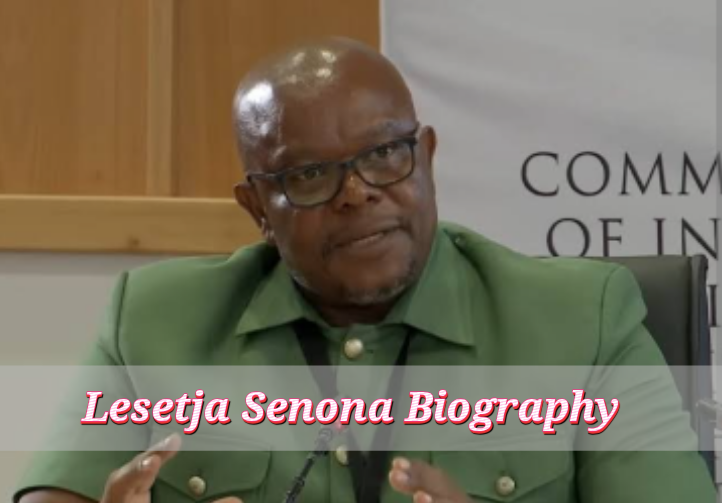
Lesetja Senona Biography
Lesetja Senona is a key figure in South African law enforcement. He serves as the head of the KwaZuluNatal Hawks, a unit focused on fighting serious crimes like corruption and organized syndicates. As a MajorGeneral in the South African Police Service, known as SAPS, Senona has built a career around upholding justice and leading investigations. In recent times, his name has appeared in news stories due to his testimony at the Madlanga Commission of Inquiry on January 27, 2026. This commission looks into claims of wrongdoing within the police force, including ties to business people involved in government contracts.
The Madlanga Commission, held at the Brigitte Mabandla Justice College in Pretoria, brings attention to issues like police integrity. Senona appeared there to respond to questions about his actions. This event reminds us that even top officers must answer to oversight bodies. Understanding Senona helps explain broader efforts to clean up corruption in the country. South Africa has faced many scandals in recent years, and figures like Senona are at the center of efforts to rebuild faith in institutions. This piece will break down his life step by step, using simple words to make it easy for anyone to follow.
Lesetja Senona Early Life and Education
Lesetja Senona was born around 1977, making him 49 years old in 2026. He grew up in South Africa during a time of big changes after apartheid ended. This period likely shaped his views on fairness and the rule of law. From a young age, he saw the value of order and accountability in society. These ideas probably guided him toward a job in policing.
Senona kept his childhood private, focusing more on his professional achievements. He comes from a background where community and service matter. His family life influenced his choice to join the police, as he wanted to make a difference in fighting crime. South Africa in the 1980s and 1990s was a place of transition, with new opportunities for education and careers. Senona took advantage of this to build skills for his future role.
For education, Senona completed training programs within the South African Police Service. He focused on law enforcement skills, such as how to investigate crimes and lead teams. These courses included lessons on ethics, which means doing the right thing even when no one is watching. He also studied leadership, learning how to make smart decisions under pressure. Operational training helped him understand fieldwork, like gathering evidence and working with communities.
Senona did not attend a regular university for a degree in something like law or business. Instead, his learning came from SAPS programs designed for officers. These include workshops on strategic thinking, which is planning ahead to solve problems. He built knowledge in areas like intelligence gathering, which involves collecting information on criminals without them knowing. This hands-on education prepared him for real-world challenges in policing.
By completing these programs, Senona showed dedication to improving himself. In South Africa, police training emphasizes respect for human rights and fighting corruption. Senona’s path highlights how education in law enforcement can lead to high positions. It also shows that success comes from continuous learning, not just from school books. Readers can see that anyone interested in policing should focus on building practical skills through training.
Lesetja Senona Career
Lesetja Senona started his career in the South African Police Service with basic roles in policing. He worked on the ground, dealing with everyday crimes and helping communities. Over time, he moved into intelligence work, which means collecting secret information to stop bigger threats. This experience built his understanding of how criminal groups operate.
As he gained skills, Senona rose through the ranks. He took on leadership positions, guiding teams in investigations. His hard work led to promotions, showing trust from his bosses. By the late 2010s, he became a MajorGeneral, a high rank that comes with big responsibilities. This title means he oversees important operations and makes key decisions.
Since around 2019, Senona has led the KwaZuluNatal Hawks. The Hawks, or Directorate for Priority Crime Investigation, handle serious cases like organized crime, fraud, and corruption. In KZN, this includes fighting drug syndicates, cash robberies, and shootings. Senona’s job involves planning arrests, working with other agencies, and ensuring his team follows the law.
Under his leadership, the KZN Hawks have made progress in some areas. For example, they have arrested people involved in drug trafficking. Senona focuses on cases that affect public safety, like stopping gangs that harm neighborhoods. He also deals with corruption inside the police, though he says these are individual problems, not widespread issues.
Senona’s career shows the path many officers take: start small, learn on the job, and lead others. He has handled complex investigations, using tools like surveillance and witness protection. His role requires staying updated on new crime trends, such as cyber threats or money laundering. This work helps protect South Africans from harm.
In meetings and forums, Senona represents the Hawks at national and provincial levels. He coordinates with the National Police Commissioner and other leaders. His achievements include building stronger teams and improving response times to crimes. However, his position also brings attention, especially during inquiries like the Madlanga Commission.
Readers can learn from Senona’s career that policing needs patience and integrity. It is not just about action; it involves strategy and teamwork. For those thinking about a job in law enforcement, his story illustrates the rewards and demands of the field.
Lesetja Senona Allegations and Controversies
Lesetja Senona has faced serious claims during the Madlanga Commission of Inquiry, which started looking into police corruption and organized crime in late 2025. The commission, led by Justice Mbuyiseli Madlanga, held hearings at the Brigitte Mabandla Justice College in Pretoria. On January 27, 2026, Senona testified to answer questions about his actions.
One main allegation is that Senona had close ties to Vusimuzi “Cat” Matlala, a businessman accused of crimes. Witnesses said Senona helped Matlala win a R360 million contract with SAPS for medical services through Medicare 24. This happened around 2024 to 2025. Senona denied this, saying he had no role in tenders. He explained that big contracts are managed by the national SAPS office, not local leaders like him. He stated he never got any payments or benefits from Matlala.
Another claim is that Senona leaked secret police information to Matlala. This includes details about investigations or political killings. Witnesses like LieutenantGeneral Dumisani Khumalo and an anonymous Witness X provided evidence, such as WhatsApp messages. In one message from April 2025, Matlala shared files with Senona, including searches on foundations and memos linked to President Cyril Ramaphosa. Senona said he did not share any classified info and would never break his oath as an officer.
Senona is also accused of being part of the “Big 5 cartel,” a group said to involve business people and police in wrongdoing. He rejected this, saying he only knows the Big 5 as animals in South African wildlife: elephant, lion, buffalo, rhino, and leopard. He added that in KZN, he deals with drug and robbery groups, not cartels infiltrating the police.
In his testimony, Senona described a meeting on April 15, 2025, where he went with Matlala to see KZN Police Commissioner LieutenantGeneral Nhlanhla Mkhwanazi. The talk was about delayed payments for Matlala’s contract. Senona said Mkhwanazi offered to help with payments and stop a case against Matlala if he gave info on another officer, LieutenantGeneral Shadrack Sibiya. Senona called his role “morale support” and admitted they had drinks after hours. Later, he received threatening messages from Mkhwanazi.
Senona criticized the evidence against him, noting words like “seemingly” and “presumably” in witness statements lack proof. He accused some of targeting him unfairly. The commission also asked about his son Thato’s business with Matlala on a property in Pretoria, but Senona said it never happened.
These controversies show the challenges in policing, where officers face scrutiny. The Madlanga Commission aims to find truth and improve the system. Senona’s denials stress his commitment to rules, but the inquiry continues to review all facts.
Lesetja Senona Personal Life
Lesetja Senona keeps his personal life away from public eyes. He is married, but his wife’s name is not shared in records. They had a traditional wedding in Mamelodi, Pretoria, around 2018 or 2019. At this event, he met Vusimuzi “Cat” Matlala, who was dating a relative of his wife. Senona described Matlala as humble and they became friends, calling each other “brother.” However, he said their talks were social, not businessrelated.
Senona has a son named Thato. Thato was linked to Matlala in a property deal plan in 2025, but Senona said it did not go forward. He values family privacy and avoids details that could cause issues. His religion is Christian, which guides his principles of honesty and service.
Senona’s tribe is not publicly known, as he focuses on unity rather than ethnic lines. His estimated net worth is $50,000, reflecting a modest life for his rank. He lives in a way that matches his job, emphasizing duty over wealth.
In free time, Senona likely spends moments with family, away from work stress. His story shows how personal bonds can mix with professional life, leading to questions. By keeping things private, he protects those close to him from scrutiny.
Conclusion
Lesetja Senona stands as an example of a dedicated police leader in South Africa. From his early influences to leading the KZN Hawks, he has focused on fighting crime. His career highlights the importance of training and rising through ranks with integrity. Yet, the Madlanga Commission brings light to claims that test his reputation.
Through his testimony on January 27, 2026, Senona firmly denied all allegations, stressing his oath to serve honestly. This event reminds us that law enforcement needs constant checks to maintain trust. Readers can take away lessons on the balance between power and accountability.
In the end, Senona’s life teaches that public service comes with challenges, but also chances to make positive change. As the commission wraps up, his case may lead to better practices in policing. Understanding figures like him helps society support a fairer system.
FAQs
What is Lesetja Senona’s current job?
Lesetja Senona is the MajorGeneral and head of the KwaZuluNatal Hawks, overseeing probes into serious crimes like corruption and syndicates.
How old is Lesetja Senona?
He is 49 years old, born around 1977.
What is the Madlanga Commission?
It is an inquiry led by Justice Mbuyiseli Madlanga, started in 2025, to examine corruption, organized crime, and intimidation in the police.
Who is Vusimuzi “Cat” Matlala?
Matlala is a businessman accused of crimes, including fraud and attempted murder. He won a SAPS contract and is said to have ties to police figures.
What are the main allegations against Lesetja Senona?
Claims include helping Matlala get a R360 million tender, leaking info, and links to the Big 5 cartel. Senona denied all during his January 27, 2026, testimony.
Is Lesetja Senona married?
Yes, he is married, with a traditional wedding in 2018 or 2019, but details about his wife are private.
What is the Big 5 cartel?
It is an alleged group of business people and officials involved in wrongdoing, like rigging contracts. Senona said he knows no such cartel in police work.
How did Senona meet Matlala?
They met at Senona’s wedding in Mamelodi, Pretoria, where Matlala dated a relative of Senona’s wife.
What is Senona’s religion?
He is Christian.
What training did Senona receive?
He completed SAPS programs in law enforcement, leadership, and operations, focusing on investigations and ethics.