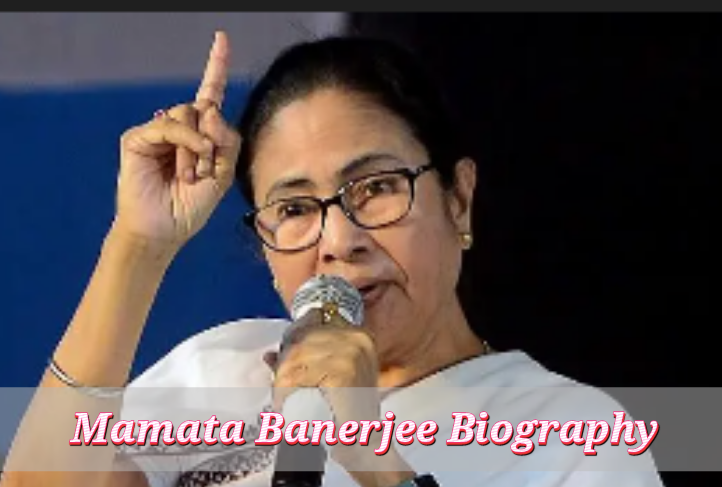
Mamata Banerjee Biography
Mamata Banerjee stands as a key figure in Indian politics. She serves as the Chief Minister of West Bengal, a role she has held since May 20, 2011. As the first woman to take this position, she broke new ground in a state known for its rich history and complex political landscape. Born on January 5, 1955, in Kolkata, she grew up in a simple family and rose through sheer determination. People often call her “Didi,” which means elder sister in Bengali, showing the affection many hold for her. Her story inspires because it shows how someone from modest beginnings can lead a major state.
Her political path started early, influenced by leaders like Indira Gandhi. She founded the All India Trinamool Congress, or TMC, in 1998 after leaving the Indian National Congress. This move changed West Bengal’s politics, ending the long rule of the Left Front in 2011. Banerjee focuses on issues like land rights, women’s welfare, and public services. Her slogan “Maa, Maati, Manush” translates to Mother, Land, People, and it guides her work. She has faced challenges but remains a strong voice for the common person.
In recent years, up to 2026, she continues to shape debates on federal relations and voter rights. Her leadership during tough times, like health crises and economic shifts, has drawn both praise and criticism. This biography explores her life to help readers understand her impact on India. At 71 years old in 2026, she remains active, fighting for what she believes in.
Mamata Banerjee Early Life
Mamata Banerjee she was born on January 5, 1955, in Kolkata, then called Calcutta. She grew up in a lower middle class Bengali Hindu Brahmin family. Her father, Promileswar Banerjee, worked as a freedom fighter during India’s independence struggle. He passed away when Mamata was just 17 years old due to lack of proper medical care. This loss shaped her views on health and poverty. Her mother, Gayetri Devi, raised the family through hard times. Mamata was one of seven siblings, learning early about sharing and resilience.
The family lived in a modest neighborhood in south Kolkata. Money was tight, and young Mamata saw the struggles of everyday people. These experiences built her empathy for the poor and working class. She often speaks about how her father’s ideals of justice influenced her. From a young age, she showed leadership, organizing local events and helping neighbors. This period laid the foundation for her future in public service.
By her teens, she became involved in community activities. The death of her father made her more determined to fight injustice. She learned to stand up for rights, a trait that would define her career. Her early years in Kolkata’s bustling streets taught her about real life issues like education access and job shortages. These lessons stayed with her as she entered politics.
Mamata Banerjee Education
Mamata Banerjee pursued her studies with focus despite family hardships. She completed her higher secondary education in 1970 from Deshbandhu Sishu Sikshalay. She earned a bachelor’s degree in history from Jogamaya Devi College. Later, she got a master’s degree in Islamic history from the University of Calcutta. She also holds a Bachelor of Education from Shri Shikshayatan College and a law degree from Jogesh Chandra Chaudhuri Law College.
Her education journey was not smooth. She balanced studies with early political work. At 15, she joined student groups, founding Chhatra Parishad Unions. She defeated rival student factions, showing her organizing skills. There was a note about a claimed PhD from a university that did not exist, leading her to drop the “Dr.” title. Her degrees helped her understand history, law, and teaching, which she uses in governance.
Education remains a priority in her policies. She draws from her own path to push for better schools and scholarships. Her background shows how learning can empower people from simple homes.
Mamata Banerjee Personal Life
Mamata Banerjee leads a simple personal life. She has never married, choosing to devote herself to public service. She lives modestly, often wearing plain cotton saris and slippers. This style reflects her connection to ordinary people. She calls herself a social worker at heart.
Beyond politics, she enjoys creative pursuits. She paints oil canvases, with over 5,000 works to her name. Some have been sold at auctions for charity. She writes poetry and has published more than 20 books. In 2022, she received a Bangla Academy award for her writing. Music is another interest; she composes songs and earns royalties from them.
Her family remains close. She honors her mother’s support and her father’s legacy. Health wise, she has faced issues, like injuries during campaigns, but she bounces back. In 2021, she campaigned from a wheelchair after a leg injury. Her life shows dedication to causes over personal comfort.
Mamata Banerjee Net Worth
Mamata Banerjee’s net worth is modest compared to other leaders. As of her latest declarations in 2025, her assets total about Rs 15.38 lakh. This makes her the poorest serving Chief Minister in India, according to reports from groups like the Association for Democratic Reforms. She has no immovable property, like land or houses.
Her assets include cash of Rs 69,255 and bank deposits around Rs 13.5 lakh. She owns jewelry worth about Rs 43,837, just 9 grams of gold. Her income comes from her salary as Chief Minister, about Rs 2.1 lakh per month, plus allowances totaling Rs 40,000 monthly. She also earns from book royalties and music.
In 2021 affidavits, her assets were similar, showing consistency in her simple lifestyle. She lists her profession as social work and politics. This low net worth highlights her focus on service rather than wealth. It contrasts with richer Chief Ministers, like Andhra Pradesh’s N. Chandrababu Naidu, whose assets exceed Rs 931 crore.
Mamata Banerjee Career
Mamata Banerjee’s career spans decades in politics. She started in the 1970s with the Indian National Congress. Inspired by Indira Gandhi, she joined the party’s youth wing. From 1976 to 1980, she served as General Secretary of Mahila Congress in West Bengal. By 1978, she became Secretary of the District Congress Committee.
In 1984, at age 29, she won her first Lok Sabha seat from Jadavpur, defeating veteran Somnath Chatterjee. She became one of India’s youngest parliamentarians. She lost in 1989 but won back in 1991 and held Kolkata South until 2009.
Her ministerial roles began in 1991 as Union Minister of State for Human Resources, Youth, Sports, and Women and Child Development under P.V. Narasimha Rao. In 1999, as Railways Minister under Atal Bihari Vajpayee, she introduced new trains like Duronto Express and women only services. She expanded Kolkata Metro and focused on tourism, like the Darjeeling Himalayan Railway. She held the post again from 2009 to 2011 under Manmohan Singh.
Frustrated with Congress, she founded TMC on January 1, 1998. TMC allied with NDA in 1999 and UPA in 2004 and 2009. She led protests against Left Front’s land policies in Singur and Nandigram from 2006 to 2007, opposing Tata Motors and Salim Group projects. These movements boosted her popularity.
In 2011, TMC won the state assembly, ending 34 years of Left rule. Banerjee became Chief Minister on May 20, 2011. She won re elections in 2016 and 2021. As CM, she returned land to Singur farmers and set up the Gorkhaland Territorial Administration. She reformed education by timely teacher payments and faster pensions. In health, she aimed for better infrastructure.
Her schemes include Kanyashree for girl education, winning a UN award in 2017, and Lakshmir Bhandar for women’s financial aid. She promoted zero polio in 2012 and open defecation free districts. During COVID 19, her response included doorstep services via Duare Sarkar.
Electoral highlights include:
In 1984, won Jadavpur Lok Sabha seat against Somnath Chatterjee of CPI M.
In 1991 to 2009, won multiple terms from Kolkata South.
In 2011, led TMC to victory in West Bengal assembly, defeating Left Front.
In 2016, TMC won again with a strong majority.
In 2021, won despite challenges, initially contesting Nandigram but securing Bhabanipur by election.
Her career shows a shift from national to state focus, emphasizing people centered policies.
Mamata Banerjee Controversies
Mamata Banerjee has faced several controversies. In the 1990s, she was linked to protests like the 1993 Writers Building incident where 13 died. Land agitations in Nandigram in 2007 led to violence, with 14 deaths.
Financial scandals include Saradha and Rose Valley chit funds. Her paintings were sold to accused parties, drawing probes. CBI and ED investigated her associates.
Allegations of favoring certain communities arose, like stipends for imams ruled unconstitutional by courts. During COVID 19, critics said her government under reported cases and hid data.
In 2024, the RG Kar Hospital rape murder case led to claims of cover up. Sandeshkhali violence involved protecting a TMC leader accused of abuses.
In 2026, she challenged the Election Commission’s Special Intensive Revision of electoral rolls in the Supreme Court on February 4. She argued it excluded over 58 lakh voters unfairly, especially before assembly polls. She appeared personally, calling it a threat to democracy.
ED raids on I PAC offices in January 2026 sparked rows. Banerjee visited the site, accusing agencies of stealing data. Supreme Court sought her response on ED claims.
She slammed the Union Budget 2026 on February 1, calling it discriminatory and saying West Bengal got no funds. These issues highlight tensions with the central government.
Mamata Banerjee Legacy
Mamata Banerjee’s legacy centers on empowering women and the poor. As West Bengal’s first female CM, she inspired many. Her defeat of the Left Front after 34 years changed the state’s politics.
She advanced women’s rights through Kanyashree, aiding girl education and preventing early marriages, and Lakshmir Bhandar, giving financial help to women. These won global praise, like UN recognition.
In development, she improved roads, health, and education. Her government achieved polio free status and better sanitation. She resolved Gorkhaland issues peacefully.
As Railways Minister, she modernized services, adding trains and safety measures. Her protests against land grabs protected farmers’ rights.
Culturally, she promoted Bengali heritage, helping Durga Puja gain UNESCO status in 2022. Honors include Time’s 100 Most Influential in 2012 and 2021, and Skoch CM of the Year in 2018.
Her style, simple and direct, built a personal bond with voters. Despite scandals, her popularity endures, shaping regional politics. She stands as a symbol of grassroots leadership.
Conclusion
Mamata Banerjee’s journey from a Kolkata girl to West Bengal’s leader shows grit and commitment. Her focus on people has left a mark on India. As 2026 brings new challenges like elections, her role remains vital. Her story teaches that hard work and empathy can drive change. Readers can learn from her dedication to justice and service.
FAQs
What is Mamata Banerjee’s age?
She is 71 years old as of 2026, born on January 5, 1955.
Is Mamata Banerjee married?
No, she is unmarried and focuses on public service.
What is Mamata Banerjee’s education?
She holds degrees in history, Islamic history, education, and law from colleges in Kolkata.
Why is Mamata Banerjee called Didi?
It means elder sister in Bengali, a term of endearment from supporters.
What are Mamata Banerjee’s achievements?
She ended Left rule, launched women’s schemes like Kanyashree, and improved infrastructure.
What controversies surround Mamata Banerjee?
Issues include financial scandals, violence in protests, and recent 2026 disputes over voter rolls and budgets.