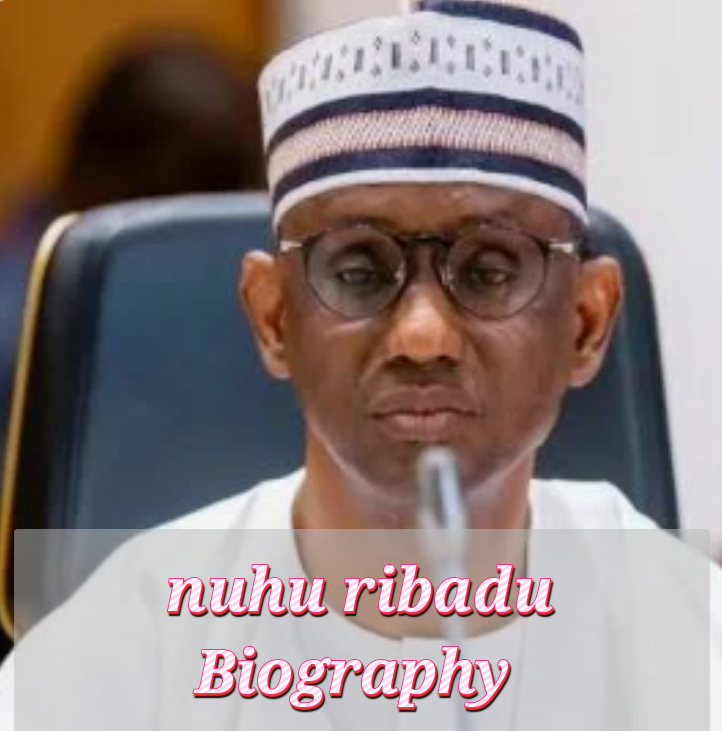
Nuhu Ribadu Biography
Nuhu Ribadu stands out as a key figure in Nigeria’s history of fighting corruption and ensuring national security. Born in 1960, he started his career as a police officer and lawyer before rising to lead major institutions. His work as the first chairman of the Economic and Financial Crimes Commission, or EFCC, marked a turning point in holding powerful people accountable for financial wrongs. Later, he entered politics and now serves as Nigeria’s National Security Adviser under President Bola Tinubu. This biography explores his life to help readers understand how one person’s efforts can influence a nation’s path toward better governance and safety. Through his story, we see the challenges of public service in Nigeria and the impact of dedication to justice. Ribadu’s journey inspires many, showing that with education and resolve, change is possible even in tough environments.
His reputation grew from prosecuting highprofile cases that recovered stolen funds and convicted officials. Today, as National Security Adviser, he coordinates efforts against threats like terrorism and economic sabotage. This role, appointed on June 19, 2023, makes him the first nonmilitary person in that position during Nigeria’s democratic era. Readers can learn from his experiences about the importance of integrity in leadership. The following sections cover his background, achievements, and contributions in simple terms to make it easy to follow.
Nuhu Ribadu Early Life
Nuhu Ribadu He was born on November 21, 1960, in Yola, which was part of Nigeria’s Northern Region at the time and is now the capital of Adamawa State. Growing up in northeastern Nigeria, he experienced a mix of cultures in an area known for its ethnic diversity, including Fulani influences common in Adamawa. His father, Ahmadu Ribadu, played a big role in shaping his views on public service. Ahmadu served as a Member of Parliament during Nigeria’s First Republic and later as a diplomat under the military government led by Muhammadu Buhari. This family connection to politics likely sparked Nuhu’s interest in law and governance from a young age.
As a child in the 1960s and 1970s, Ribadu witnessed Nigeria’s early years after independence in 1960, including periods of political instability. His upbringing in a politically active household taught him about the responsibilities of leadership. Though details about his mother or siblings are not widely shared, it’s clear that his family’s legacy encouraged him to pursue education and a career in public service. By focusing on studies early on, he laid the foundation for his future roles in fighting corruption and securing the nation. This early environment helped build his strong sense of justice, which became evident in his later work.
Nuhu Ribadu Education
Ribadu’s educational path began in his hometown of Yola. He attended Aliyu Mustapha Primary School from 1966 to 1973, where he gained basic knowledge in a local setting. Next, he went to Yelwa Government Secondary School in Yola from 1973 to 1978, building on his early learning with more advanced subjects. To prepare for university, he enrolled at the College of Preliminary Studies in Yola from 1978 to 1980.
In 1980, Ribadu started higher education at Ahmadu Bello University in Zaria, Kaduna State, studying law until 1983, when he earned a Bachelor of Laws degree. After that, he spent a year at the Nigerian Law School and was called to the bar in 1984, allowing him to practice law. He returned to Ahmadu Bello University for a Master of Laws degree, focusing on areas like the jurisprudence of corruption in Nigeria. This advanced study equipped him with deep insights into legal issues related to financial crimes.
His education in law provided the tools needed for his career in prosecution and anti-corruption efforts. By choosing a prestigious university like Ahmadu Bello, he gained knowledge that helped him navigate complex cases later on. This background also highlighted the value of formal training in building effective public institutions.
Nuhu Ribadu Personal Life
Details about Nuhu Ribadu’s personal life remain mostly private, as he focuses more on his public roles. He is married, but information about his wife or family is not often shared in the media to protect their privacy. As of 2026, he is 65 years old, having been born in 1960. Ribadu maintains a low profile on personal matters, emphasizing his professional contributions instead.
His commitment to family values likely stems from his own upbringing in a supportive household. While he has not publicly discussed children or hobbies in detail, his life shows a balance between demanding public duties and personal responsibilities. This privacy helps him avoid distractions in his highstakes positions.
Nuhu Ribadu Net Worth
Estimating Nuhu Ribadu’s net worth is challenging because he has spent most of his career in public service, where salaries are modest compared to private business. As of 2026, sources suggest his wealth comes mainly from his roles in government and politics, without major business ventures. Public declarations during elections indicate assets in the range of several million naira, but exact figures are not always disclosed.
Unlike some politicians with vast fortunes, Ribadu is not considered a billionaire. His income has included police salaries, EFCC leadership pay, and current earnings as National Security Adviser. Additional perks like allowances for official duties contribute, but he has emphasized transparency in his finances. This modest profile aligns with his anti-corruption stance, showing he practices what he preaches.
Nuhu Ribadu Career
Ribadu’s career began after his national service when he joined the Nigerian Police Force in 1986 as an Assistant Superintendent. He worked in various roles, including as Divisional Crime Officer in Lagos areas like Ajegunle, Mushin, and Apapa from 1990 to 1997. Promotions followed: Deputy Superintendent in 1992, Superintendent in 1995, Chief Superintendent in 1998, and Assistant Commissioner in 2002. By then, he headed the Legal and Prosecution Department at police headquarters.
In 2003, President Olusegun Obasanjo appointed him as the first Chairman of the EFCC, a new agency to combat financial crimes. Reappointed in 2007, he led efforts that resulted in over 270 convictions and thousands of indictments against governors, ministers, and bankers. Notable achievements included recovering billions in stolen funds and convicting the former Inspector General of Police, Tafa Balogun, who returned £150 million in 2005. Ribadu highlighted that over $380 billion had been lost to corruption since 1960, as stated on October 20, 2006.
After leaving EFCC in 2007, he faced removal and dismissal from the police in 2008. Returning from exile in 2010, he chaired the Petroleum Special Revenue Task Force from 2012 to 2014 under President Goodluck Jonathan, exposing issues in oil revenue management.
Entering politics, he joined the Action Congress of Nigeria in 2010 and ran for president in 2011, though he lost. He switched to the Peoples Democratic Party in 2014 for a governorship bid in Adamawa, then to the All Progressives Congress in 2016. He contested for Adamawa governor in 2015, 2019, and 2023, losing the last to Aishatu Dahiru Ahmed.
In June 2023, President Bola Tinubu appointed him National Security Adviser, where he has coordinated security agencies and handled cases like the arrest of Binance executives in March 2024 for currency issues. His career shows a shift from law enforcement to politics and security oversight.
Key milestones in his career include:
Joining Nigerian Police Force in 1986.
Appointed EFCC Chairman in 2003.
Promoted to Assistant Inspector General in 2007.
Presidential candidate in 2011.
Chair of Petroleum Task Force in 2012.
National Security Adviser since 2023.
This progression highlights his adaptability and commitment to national improvement.
Nuhu Ribadu Controversies
Ribadu’s bold actions have led to several controversies. In December 2007, he was removed from EFCC to attend a training course, a move critics like Wole Soyinka called political on January 2008 grounds. His dismissal from the police on December 22, 2008, forced him into exile after assassination attempts in 2009.
During EFCC tenure, he accepted a $15 million bribe from a governor as evidence, but the governor denied it, sparking debates about methods. His 2014 switch from ACN to PDP and then to APC in 2016 drew accusations of opportunism.
In 2023 governorship race, his primary win was nullified, leading to loss. As NSA, the 2024 Binance arrests raised questions about economic policies. These events show the risks of challenging powerful interests, but Ribadu has defended his actions as necessary for justice.
Nuhu Ribadu Legacy
Nuhu Ribadu’s legacy centers on transforming Nigeria’s fight against corruption. As EFCC founder, he built an agency that became a model for Africa, delisting Nigeria from global watchlists and recovering assets. His prosecutions of untouchables like police chiefs set precedents for accountability.
Internationally, he earned respect through UN roles and fellowships at Oxford and TED. In politics, his bids highlighted northeastern voices. As NSA, he advances security reforms.
His work inspires anti-corruption efforts worldwide, proving one leader can drive change. Awards include TED Fellow and Oxford Senior Fellow, recognizing his impact. Ribadu’s story teaches the value of perseverance in public service.
Conclusion
Nuhu Ribadu’s life from a Yola boy to National Security Adviser illustrates dedication to Nigeria’s progress. Through education, police work, EFCC leadership, politics, and current role, he has tackled corruption and security challenges. His experiences offer lessons on integrity and resilience. As Nigeria faces ongoing issues, figures like Ribadu remind us of the potential for positive change. His biography encourages readers to value honest leadership and contribute to society.
FAQs
Who is Nuhu Ribadu?
He is a Nigerian lawyer, retired police officer, and politician serving as National Security Adviser since June 2023.
Where is Nuhu Ribadu from?
He hails from Yola in Adamawa State, born on November 21, 1960.
What is Nuhu Ribadu known for?
He is famous for leading the EFCC from 2003 to 2007, securing convictions and fighting corruption.
What is Nuhu Ribadu’s educational background?
He holds a Bachelor and Master of Laws from Ahmadu Bello University and was called to the bar in 1984.
Has Nuhu Ribadu run for president?
Yes, he was a candidate in the 2011 election under the Action Congress of Nigeria.
What party is Nuhu Ribadu in?
He is currently with the All Progressives Congress since 2016.
Why was Nuhu Ribadu removed from EFCC?
He was sent for training in 2007, seen by some as a political move, and dismissed from police in 2008.
What is Nuhu Ribadu’s current position?
National Security Adviser, appointed on June 19, 2023.
Is Nuhu Ribadu married?
Yes, but details about his family are kept private.
What is Nuhu Ribadu’s net worth?
Estimated in millions from public service, though not publicly detailed as of 2026.