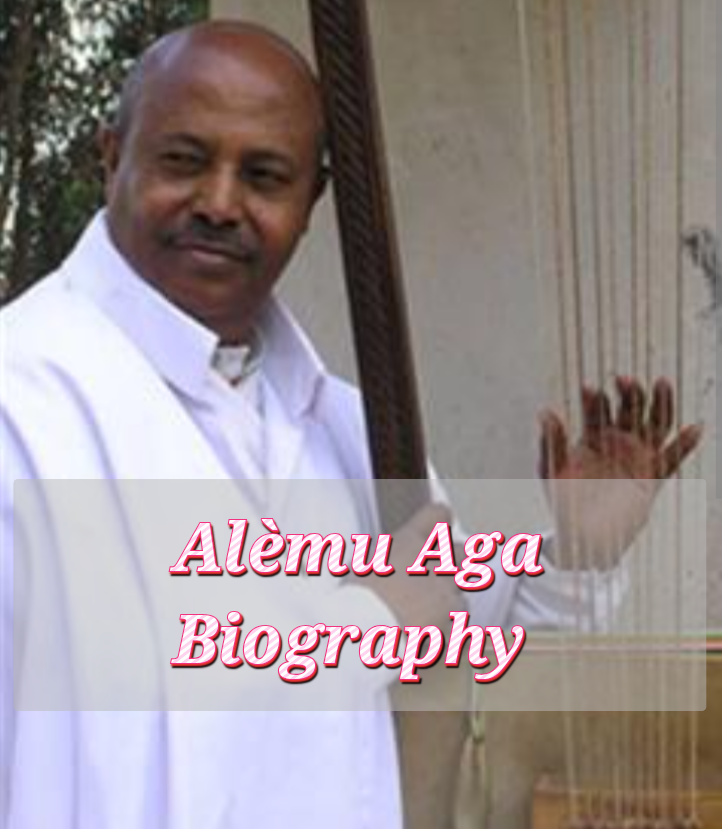
Alemu Aga Biography
Alemu Aga is a well-known musician from Ethiopia. He is famous for playing the begena, which is a special kind of harp. This instrument has ten strings and looks like a lyre. People often call it the Harp of David because of old stories that link it to King David from the Bible. Alemu was born in 1950 and has spent his life making music that touches the hearts of many.
To understand who Alemu Aga is, think about the role of music in Ethiopian culture. Ethiopia has a rich history of traditional sounds. The begena stands out because it is used for religious songs and stories. It creates calm, deep tones that help people think and pray. Alemu has become a master of this instrument. He sings in Amharic, the main language in Ethiopia, and shares old tales through his music.
His story shows how one person can keep old traditions alive. In a world where modern music is everywhere, Alemu sticks to the roots. He learned from great teachers and faced hard times, but he never gave up. This makes him important not just in Ethiopia, but around the world.
Let us look at a picture of Alemu playing his begena to see the grace of his art.
In this article, we will explore his early days, his work life, his songs and albums, what we know about his private world, and wrap up with some common questions. The goal is to teach you about Alemu and Ethiopian music in a simple way. We use easy words so everyone can follow along. By the end, you will see why Alemu Aga matters so much.
Ethiopian music has many parts. There are instruments like the krar, which is another string tool, and the masenqo, a one-string fiddle. But the begena is unique. It is big, about the size of a person, and players hold it on their lap. The strings are made from gut or nylon now. When Alemu plays, he plucks them with his fingers while singing softly. This creates a sound that feels ancient and peaceful.
Alemu’s music often talks about faith, life lessons, and history. For example, some songs are from the Ethiopian Orthodox Church. This church has been in Ethiopia for over 1,000 years. It uses music in worship, and the begena fits right in. Alemu helps keep this alive for new people.
He also faced changes in his country. Ethiopia had a revolution in 1974 that changed many things. But Alemu found ways to continue his passion. His story teaches us about staying true to what you love.
As we go deeper, remember that Alemu is more than a player. He is a teacher and a keeper of culture. His work helps us learn about Ethiopia’s past and present.
Alemu Aga Early Life and Background
Alemu Aga came into the world in 1950. His birthplace was Entoto, a place near Addis Ababa, the capital of Ethiopia. Entoto is on a hill and has a lot of history. It was once the capital before Addis Ababa took over. This area is full of old churches and natural beauty. Growing up there, Alemu saw a mix of city life and traditions.
Some stories say he was born in the Shiro Meda area of Addis Ababa. But most agree it was Entoto. As a child, he lived in a time when Ethiopia was an empire under Emperor Haile Selassie. Life was simple, with families close and communities strong.
Alemu’s interest in music started young. At age 12, he began to learn the begena. This instrument caught his eye because of its sound and meaning. In Ethiopia, the begena is not just for fun. It is for serious moments, like during Lent, a time of fasting in the Orthodox Church.
His teacher was Aleqa Tessema Welde-Emmanuel, a famous master. Aleqa means a religious leader or expert. Tessema taught Alemu the right way to play and sing. Lessons were strict, with hours of practice. Alemu had to learn songs by heart and understand their words.
While learning music, Alemu also went to school. He studied at places in Addis Ababa. Later, he went to Addis Ababa University. There, he got a degree in geography. Geography is the study of lands, people, and places. This shows Alemu was smart and liked learning about the world.
Why geography? Maybe because Ethiopia has diverse lands, from mountains to deserts. Entoto is high up, so he knew about different environments. His education helped him later when he taught others.
In his early years, Alemu balanced school and music. He practiced the begena at home or with his teacher. The instrument is hard to learn. You need strong fingers and a good voice. Alemu worked hard and became good quickly.
Ethiopia in the 1950s and 1960s was changing. More schools opened, and cities grew. But traditions stayed important. Alemu’s family likely supported his music, as many Ethiopians value culture.
By his teens, Alemu was ready for more. He started to perform locally. People noticed his talent. This set the stage for his future work.
Here is another image of young Alemu or a similar scene to help picture his beginnings.
Learning the begena also meant learning history. Legends say King David played a similar harp. In Ethiopia, stories link it to the Queen of Sheba, who visited King Solomon. She brought back knowledge, and some say the harp came too. This makes the begena special in Ethiopian hearts.
Alemu’s background shaped him. From a hill town to university, he gained knowledge. This mix of music and studies made him unique. As we move to his career, see how these early steps led to big things.
Alemu Aga Career
Alemu Aga’s work life started after university. He graduated with a geography degree from Addis Ababa University around the early 1970s. Then, he got a job teaching at the Yared Music School. Yared is named after Saint Yared, who created Ethiopian church music long ago.
At the school, Alemu taught the begena for seven years. He shared what he learned from his master. Students came to him to understand the instrument. This was a good time for him. He could play and teach.
But in 1974, Ethiopia had a big change. The Derg took power. This was a military group that ended the empire. They had rules against religion. The begena is linked to church songs, so it faced problems. The government banned it from radio and schools. Alemu could not teach it freely.
In 1980, he left the school. He opened a small shop in the Piazza area of Addis Ababa. Piazza is a busy market place. There, he sold things and taught students privately. He kept the begena alive in secret ways.
His first recording was in 1972. A researcher named Cynthia Tse Kimberlin recorded him for UNESCO. UNESCO is a group that protects culture. This was before the Derg, so it was okay. These recordings helped save the music.
The Derg ruled until 1991. After that, things got better. Alemu could perform in public again. He started to travel outside Ethiopia in the 1990s. He went to Europe and other places. People there heard the begena for the first time.
One big moment was in 1994. His album came out in the Ethiopiques series. This series shares old Ethiopian music with the world. It made Alemu famous globally.
He also worked with other artists. In 1995, he made an album with Asnakech Worku, who plays the krar. They blended their sounds.
In 2009, he recorded with other begena players. This showed team work to keep the tradition.
Alemu still teaches today. He has a shop where young people learn. He performs at events and on radio now.
His career shows strength. From teacher to shop owner to world artist, he adapted. The begena almost faded, but Alemu saved it.
During hard times, many musicians stopped. But Alemu used his geography knowledge maybe to understand places and people better. His songs often reflect life in Ethiopia.
He has been in interviews, like on YouTube, talking about the begena. He explains its holy side. Players must be clean in heart, he says.
Alemu’s work helps tourism too. People visit Ethiopia to hear traditional music. He is part of that draw.
Over 50 years, his career has grown. From local boy to global master, Alemu inspires.
Alemu Aga Discography
Alemu Aga has made several albums that show his skill. Here is a list of his main works.
First, “The Harp of King David” from 1994. This is part of Ethiopiques Volume 11 by Buda Musique. It has solo begena songs. Tracks include religious pieces like “Aba Gragn Mote” and “Abatatchin Hoy.” The music is calm and deep. It lasts about 60 minutes. This album brought the begena to many listeners outside Ethiopia.
Next, “Ende Jerusalem” in 1995. He made this with Asnakech Worku on Acoustic Music label. Asnakech plays the krar, another string instrument. They mix begena and krar for a fresh sound. Songs tell stories from Bible times. It is about 50 minutes long. This shows how Alemu works with others.
Then, he featured in “The Rough Guide to the Music of Ethiopia” in 2004 by World Music Network. This is a collection of Ethiopian songs. Alemu adds a few tracks. It helps introduce his music to world music fans.
In 2009, “The Begenna of Elders – The Harp of David in Ethiopia” on Laika-Records. This has Alemu with Seyoum Mengistu, Admassu Fikre, and Tafesse Tesfaye. They all play begena. It is like a group session. Tracks are traditional and new. About 70 minutes.
Later, “Keto Aikerim Motu (Live)” in 2018. This is a live recording. It captures his performance energy. Songs like “Medinanna Zelesegna” and “Man Yemeramer?” are there.
His music is on Spotify and Apple Music too. Popular songs include “The Sacred Names Of The Begenna.”
These works keep the begena sound alive. Each album teaches about Ethiopian culture.
Alemu Aga Personal Life
Little is shared publicly about Alemu Aga’s private world. He lives in Addis Ababa. He focuses on music and teaching. Some sources hint at a family, but details are not clear. He seems to lead a quiet life, true to the calm nature of his instrument.
Alemu is tied to the Ethiopian Orthodox Church. His songs show deep faith. He may spend time in prayer and community events.
He runs a shop in Piazza, where he meets people. This is part of his daily routine.
Overall, Alemu keeps his personal side private. His life revolves around the begena and sharing it.
Conclusion
Alemu Aga is a key figure in Ethiopian music. Born in 1950, he mastered the begena and faced challenges but persevered. His career spans teaching, recording, and performing. Albums like “The Harp of King David” share his gift worldwide.
His legacy is preserving culture. He influences young musicians and keeps traditions strong.
To learn more, listen to his music or visit Ethiopia. Alemu shows how one person can make a big difference.
FAQs
What is the begena?
It is a ten-stringed lyre from Ethiopia, used for religious and folk songs. Called the Harp of David.
When was Alemu Aga born?
In 1950, in Entoto near Addis Ababa.
What is Alemu Aga known for?
Mastering and teaching the begena, plus his albums.
How did politics affect his career?
The Derg banned religious music in 1974, so he stopped teaching publicly until 1991.
Where can I listen to his music?
On Spotify, Apple Music, or YouTube.
What other instruments are like the begena?
The krar or masenqo in Ethiopia.
What is his legacy?
He revives and shares Ethiopian traditional music globally.