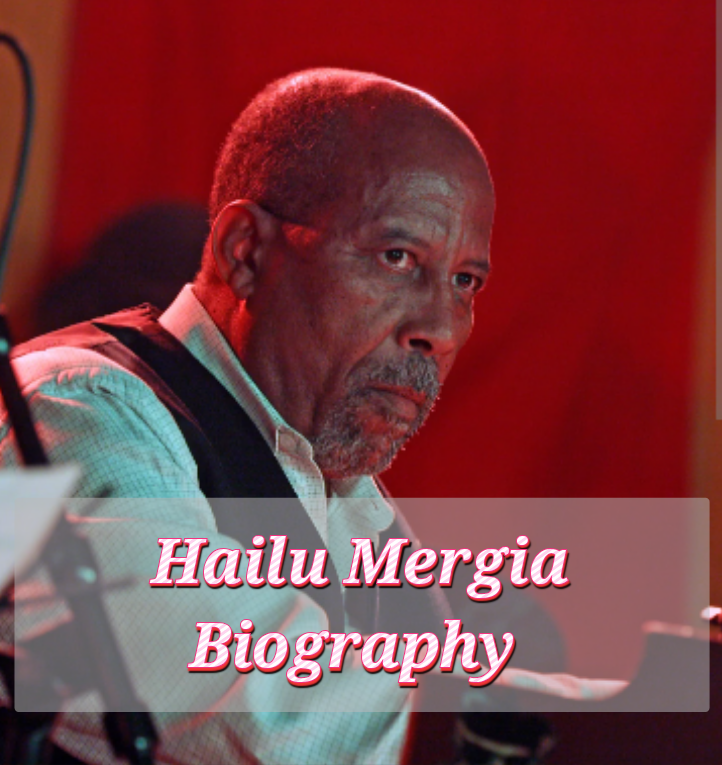
Hailu Mergia Biography
Hailu Mergia is an Ethiopian musician known for his skill on the keyboard and accordion. He helped create a special style of music called Ethio-jazz during the 1970s. This style mixes traditional Ethiopian sounds with jazz and funk. After many years away from the spotlight, his music gained new fans around the world in the 2010s. Today, he lives in the United States and continues to perform and record.
This article looks at who Hailu Mergia is in a clear way. We cover his early years, his work in music, his albums, his personal life, and more. The goal is to help readers understand his story and why his music matters.
Hailu Mergia Early Life
Hailu Mergia was born in 1946 in Debre Birhan, a town in the Shewa Province of Ethiopia. This area is in the Amhara region. His family has Amhara and Oromo roots. As a child, he listened to traditional Amhara songs from songbooks. These melodies shaped his early sense of music.
When he was 10 years old, he moved with his family to Addis Ababa, the capital city of Ethiopia. Life in the big city was different from the countryside. He started school there but did not finish it. Instead, he focused on music.
At the age of 14, Hailu taught himself to play the accordion. He had no formal teacher. He practiced a lot and got better quickly. To support himself, he joined the army music department when he was young. This gave him a steady job and a chance to play music. He left the army around age 16 and began working as a musician full time.
In Addis Ababa, he played in nightclubs and with small groups. He sang at first but soon switched to playing instruments. The accordion became his main tool. He also learned the keyboard and organ. These skills helped him stand out in the growing music scene of the city.
Hailu Mergia Career
Hailu Mergia’s career took off in the 1970s. This time is known as the golden age of Ethiopian music. Many artists mixed local traditions with new sounds from the West.
He joined the Walias Band, a popular group in Addis Ababa. The band had a long residency at the Addis Ababa Hilton hotel. They played almost every night for about 10 years. Hailu was the keyboard player. The band created a unique sound with strong rhythms and jazz elements. They drew ideas from American musicians like King Curtis, Junior Walker, and Maceo Parker.
During this period, Ethiopia faced big changes. In 1974, the Derg regime took power. This military government placed strict rules on music. They limited songs with lyrics that could be seen as political. Many groups, including the Walias Band, turned to instrumental music to avoid problems. This led to creative work without words.
Hailu also worked with the Dahlak Band. He recorded some music with them. His playing featured smooth melodies on the accordion and organ. He used polyrhythms, which are layered beats common in Ethiopian music.
In the early 1980s, the Walias Band went on tour in the United States. They performed in different cities. Some members, including Hailu, decided to stay in America in 1981 or soon after. They sought better opportunities and safety from the political situation in Ethiopia.
After settling in the US, Hailu studied at Howard University in Washington, D.C. He formed a small group called the Zula Band for a short time. In 1985, he released a solo album. Then, he stepped away from professional music for many years.
He opened a restaurant in 1991. Later, in 1998, he began driving a taxi at Washington Dulles International Airport. He drove for many years. While in his taxi, he kept composing music. He used a small keyboard to record ideas.
In 2013, a label called Awesome Tapes from Africa reissued one of his old albums. This brought his music to new listeners. Fans around the world discovered his work. He started performing again. He released new albums and toured in places like Europe, Australia, and the US.
His revival showed his talent still connects with people. He worked with new musicians, including bass player Mike Majkowski and drummer Tony Buck. They formed a trio for live shows and recordings. Hailu continues to play and create music today.
Hailu Mergia Discography
Hailu Mergia has a list of key albums that show his growth as a musician. Here is a simple list of his main releases:
- Tezeta (1975): This album came out with the Walias Band. It includes jazz takes on traditional Ethiopian tunes.
- Tche Belew (1977): Another Walias Band recording. It features the famous track “Muziqawi Silt,” which many people know.
- Wede Harer Guzo (1978): Recorded with the Dahlak Band. This cassette album has jazz and funk elements. It was hard to find for years but gained popularity later.
- Hailu Mergia & His Classical Instrument (1985): His first solo album after moving to the US. It was reissued in 2013 and helped start his revival.
- Lala Belu (2018): A new album after many years. It includes fresh compositions with his trio.
- Yene Mircha (2020): Another recent release with original pieces.
- Pioneer Works Swing (Live) (2023): A live recording from a performance.
These albums cover his early band work, solo efforts, and later career. Many tracks are instrumental. They blend Ethiopian folk melodies with funk and jazz. Some songs have millions of streams online today.
Hailu Mergia Personal Life
Hailu Mergia keeps his personal life private. He does not share much about his family in public interviews. He has lived in Washington, D.C., since the 1980s. He became a US resident after leaving Ethiopia.
He drove a taxi for a long time while raising a family and supporting himself. This job gave him stability. He has spoken about how he enjoyed the quiet time in his cab to think about music.
He is now in his late 70s. Born in 1946, he is around 79 or 80 years old as of 2025 and 2026. He stays active with music tours and recordings. He values his Ethiopian roots and shares them through his performances.
He has no public details about a wife or children in reliable sources. He focuses on his art and the joy it brings to others.
Conclusion
Hailu Mergia’s story is one of talent, hard work, and new beginnings. He started as a self-taught player in Ethiopia. He became a key figure in the country’s music scene. Political changes forced him to leave his home. In the US, he took on everyday jobs but never stopped loving music.
His revival in recent years proves that good art lasts. Young people now listen to his old tracks and new ones. He shows how music can cross borders and time. His use of the accordion and keyboard created a sound that feels both old and fresh.
If you want to know Ethiopian music better, start with Hailu Mergia. His work opens the door to Ethio-jazz and the rich culture of his country. Listen to his albums. You may find something new that touches you.
FAQs
Where is Hailu Mergia from?
He is from Debre Birhan in Ethiopia. He grew up in Addis Ababa.
What genre is Hailu Mergia?
He plays Ethio-jazz, which mixes Ethiopian folk, jazz, and funk. His music is mostly instrumental.
How old is Hailu Mergia?
He was born in 1946. He is about 79 or 80 years old now.
What instruments does Hailu Mergia play?
He plays the accordion, keyboard, and organ. He also uses the melodica at times.
Why did Hailu Mergia move to the US?
He moved during a tour with the Walias Band in the early 1980s. He stayed because of political issues in Ethiopia under the Derg regime.
What is Hailu Mergia’s most famous album?
Many point to Wede Harer Guzo or Tche Belew. Tracks like “Muziqawi Silt” and “Anchin Kfu Ayinkash” are very popular.