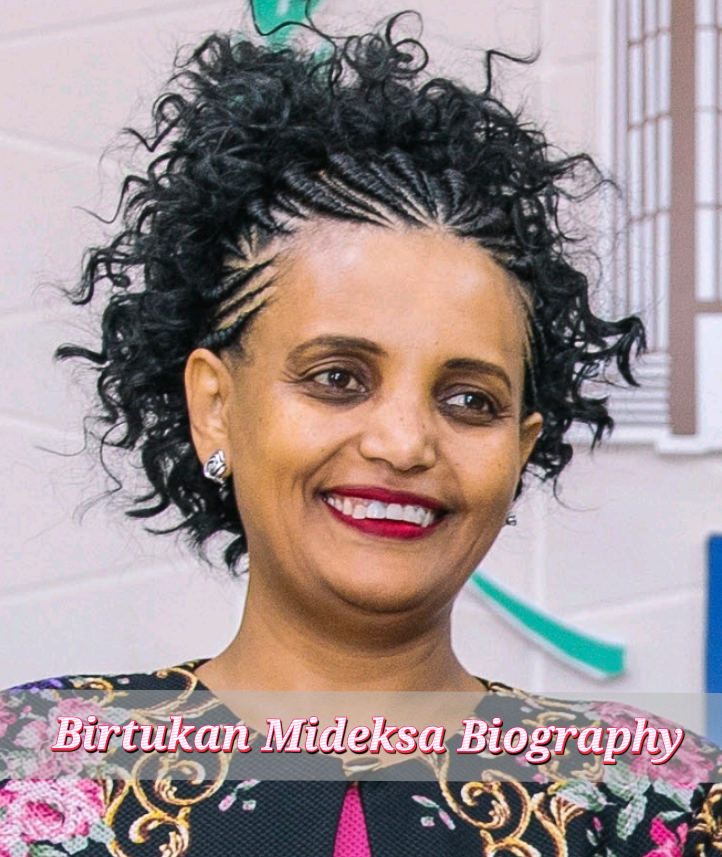
Birtukan Mideksa Biography
Birtukan Mideksa stands out as a key figure in Ethiopia’s push for democracy. Born on April 27, 1974, in Addis Ababa, she started her path as a judge and later became a strong voice in opposition politics. Her story shows courage in facing tough times, including time in prison, and her work to improve elections in her country. This biography looks at her life to teach about the challenges and wins in Ethiopian politics. It covers her early years, schooling, family, money matters, work life, hard moments, lasting impact, and ends with common questions. Her journey helps people understand how one person can push for change in a nation working toward fair rule. Over the years, she has inspired many with her stand for justice, especially during the 2005 elections and her role in the National Election Board of Ethiopia from 2018 to 2023. This account uses facts from reliable sources to give a clear picture of her contributions.
Birtukan Mideksa Early Life
Birtukan Mideksa She was born on April 27, 1974, in Addis Ababa, which was part of the Ethiopian Empire at that time. She grew up in a simple family setting, which shaped her strong values. Addis Ababa, the capital city, offered a mix of cultures and challenges during her childhood. The city was a hub for education and politics, influencing young minds like hers. In her early days, she attended local schools that focused on basic learning. She went to Miazia 23 missionary elementary school, where she learned reading, writing, and moral lessons from teachers linked to religious groups. This school helped build her sense of right and wrong. After that, she moved to Yekatit 12 secondary school, also known as Etege Menen School. There, she studied subjects like history, math, and languages, preparing for higher studies. Her family supported her schooling despite limited resources, common in many Ethiopian homes back then. Growing up in the 1970s and 1980s, she saw big changes in Ethiopia, like the shift from empire to military rule in 1974, the year she was born. This time had conflicts and economic issues, but it taught her about resilience. As a child, she showed smarts and a drive to learn, setting the stage for her future in law and politics. Her early life highlights how everyday experiences in a changing country can lead to a commitment to fairness. Sources note she excelled in her studies from a young age, showing leadership even then. By focusing on education, she avoided many hardships faced by peers. This period built her character, making her ready for bigger roles later.
Birtukan Mideksa Education
Birtukan Mideksa’s schooling played a big part in her success. She finished high school at Yekatit 12 secondary school in Addis Ababa. Then, she joined Addis Ababa University, a top school in Ethiopia, to study law. She earned her Bachelor of Laws degree, or LLB, from there. The exact year of graduation is not listed in records, but it came after her secondary education in the early 1990s. At the university, she learned about Ethiopian laws, human rights, and court systems. This knowledge helped her become a judge later. Addis Ababa University has trained many leaders, and her time there sharpened her skills in thinking and arguing cases. Years later, in 2014, she got a Master of Arts in Public Administration from Harvard University in the United States. Harvard is a world famous school, and her studies there focused on how governments work and lead. She went to Harvard after leaving Ethiopia for safety reasons. This advanced degree added to her expertise in democracy and public service. Her education path shows a move from local learning to global insights. It equipped her to handle complex political issues back home. In simple terms, her degrees opened doors to jobs in law and government. They also gave her tools to fight for better rules in Ethiopia. Education for women in Ethiopia can be tough due to cultural norms, but she broke barriers. Her story encourages others to pursue learning despite obstacles. Overall, her academic background supports her work in justice and reform.
Birtukan Mideksa Personal Life
Birtukan Mideksa’s personal world centers on family and faith. She is a single mother to her daughter, Haale Mideksa, born in 2005. Raising a child alone while in politics shows her strength. Her daughter stayed with her during hard times, like when Birtukan was in prison. They separated for a while when Birtukan went to the United States in 2011, but they reunited later. Sources describe her as an Ethiopian evangelical, meaning she follows a Christian faith that stresses personal belief and community service. This faith likely guides her choices in life and work. She keeps much of her private life quiet, focusing more on public duties. No details emerge about marriages or other family members in public records. Her personal story ties into her public image as a caring leader. Being a mother in the spotlight, especially during arrests, drew attention from groups like Amnesty International, who noted her as a single parent in tough spots. In 2010, after release from prison, she spoke of balancing family with her fight for rights. Her life in exile from 2011 to 2018 involved raising her daughter in Washington, DC, away from Ethiopia’s unrest. Now, back home, she lives a low key personal life. This section keeps to known facts, avoiding guesses about her daily routines. Her personal experiences add depth to her role as a role model for Ethiopian women.
Birtukan Mideksa Net Worth
Information on Birtukan Mideksa’s net worth is not publicly available. As a former judge, politician, and public servant, her income likely came from government salaries and fellowships. Judges in Ethiopia earn modest pay, around the average for public workers. Her time as a lawyer from 2003 to 2005 might have brought some earnings, but no figures exist. During exile in the US from 2011 to 2018, she worked as a researcher at the National Endowment for Democracy, which provides stipends for fellows. Her Harvard studies in 2014 were supported by scholarships. As chair of the National Election Board of Ethiopia from 2018 to 2023, she received a government wage, but Ethiopian officials do not disclose personal finances often. No reports suggest wealth from business or investments. Politicians like her focus on service, not riches. Searches show no estimates, unlike for business leaders. If any, it would be low, given her career in public roles. This lack of data is common for opposition figures in Africa, where transparency varies. Her value lies more in her impact than money. Without verified numbers, we note that her net worth remains unknown as of 2024.
Birtukan Mideksa Career
Birtukan Mideksa’s work life spans law, politics, and election oversight. She began as an associate judge in Ethiopia’s courts. From 1998 to 2003, she served at the Federal First Instance Court, handling cases fairly. In July 2002, she led the trial of Siye Abraha, a former defense minister accused of corruption. She granted him bail, but authorities re arrested him soon after. This led to threats, causing her to resign in late 2003. Next, she opened her own law firm and worked as a defense lawyer until 2005. This showed her commitment to justice outside government control. In 2005, she entered politics by joining the Rainbow Ethiopia Movement for Democracy and Social Justice. She became part of the Coalition for Unity and Democracy, or CUD, serving as first vice president from 2005 to 2007. The group pushed for fair elections and rule of law. After the 2005 polls, where CUD won many seats but claimed fraud, she faced arrest. Released in 2007, she founded the Unity for Democracy and Justice party, or UDJ, in 2008. She led it as president until 2010, focusing on peaceful change. Re arrested in December 2008, she spent time in prison until October 2010. In 2011, she left for the US, taking fellowships. She got the Reagan Fascell Democracy Fellowship in 2011 from the National Endowment for Democracy. In 2013, she was a fellow at Harvard’s W E B Du Bois Institute. From 2014 to 2018, she researched at the National Endowment for Democracy. Back in Ethiopia in November 2018, she took the chair role at the National Election Board of Ethiopia on November 23, 2018. She oversaw the 2021 elections, calling them a step toward better democracy. She resigned on June 26, 2023, effective August 7, 2023. Her career lists key roles as follows.
Judge at Federal High Court, 1998 to 2003.
Private lawyer, 2003 to 2005.
Vice president of CUD, 2005 to 2007.
Founder and president of UDJ, 2008 to 2010.
Fellow and researcher in US, 2011 to 2018.
Chair of NEBE, 2018 to 2023. This path educates on how legal skills can lead to political action. She always aimed for transparent systems.
Birtukan Mideksa Controversies
Birtukan Mideksa faced several disputes in her public life. In 2002, as a judge, she granted bail to Siye Abraha in a corruption case. Government forces re arrested him, leading to threats against her. She resigned in 2003, citing pressure. This event raised questions about judicial freedom in Ethiopia. In 2005, after elections, she and CUD leaders got arrested for trying to overthrow the government. They received life sentences, but many groups called it political. Amnesty International labeled her a prisoner of conscience. Pardoned in 2007 after signing a document, she later spoke about it abroad. In December 2008, authorities re arrested her, saying she broke pardon terms by denying the apology. Human Rights Watch saw this as motivated by politics. She served until October 2010, when pardoned again after a regret letter. Debates continue on whether pardons were fair or forced. Some critics say she compromised by signing, but supporters see it as survival. No other major scandals appear in records, like corruption. Her cases highlight tensions between opposition and ruling parties. These events teach about risks in standing against power. Facts from 2002, 2005, 2007, 2008, and 2010 anchor the story.
Birtukan Mideksa Legacy
Birtukan Mideksa’s impact lasts in Ethiopia’s democracy efforts. She symbolizes resistance to unfair rule, inspiring youth and women. Her judicial stand in 2002 showed integrity. In politics, she led UDJ toward peaceful reform. Imprisonments in 2005 and 2008 drew global attention, with Amnesty International campaigns. BBC called her a heroine as a single mother leader in 2010. Her exile work from 2011 to 2018 spread ideas on democracy. Returning in 2018, she reformed elections as NEBE chair, improving transparency in 2021 polls. Though imperfect, it marked progress under Prime Minister Abiy Ahmed. She resigned in 2023, but her role helped build trust in voting. As a woman in African politics, she breaks norms, encouraging more female leaders. Her story compares to global figures like Aung San Suu Kyi. In 2024, she remains an independent voice for rights. Her legacy teaches resilience and the value of law in change. Future generations may see her as a pioneer in Ethiopia’s path to full democracy.
Conclusion
Birtukan Mideksa’s life tells a story of dedication to justice in Ethiopia. From her birth in 1974 to her NEBE role ending in 2023, she faced challenges but pushed for better. Her education, career, and personal strength show how individuals can influence a nation. This biography aims to educate on her factual journey, using simple words for clear understanding. It avoids extras, focusing on key events with dates. Her example encourages readers to value democracy and stand for rights. As Ethiopia evolves, her contributions remain vital.
FAQs
Who is Birtukan Mideksa?
She is an Ethiopian politician, former judge, and ex chair of the National Election Board of Ethiopia from 2018 to 2023.
Why was Birtukan Mideksa imprisoned?
She faced arrests in 2005 and 2008 for charges linked to opposition activities, seen by groups as political.
What is Birtukan Mideksa’s education?
She has an LLB from Addis Ababa University and an MA from Harvard in 2014.
What happened to Birtukan Mideksa after exile?
She returned in 2018, led NEBE until 2023, and now lives independently.
Is Birtukan Mideksa still in politics?
She resigned from NEBE in 2023 and stays active as an advocate, but not in a party role.