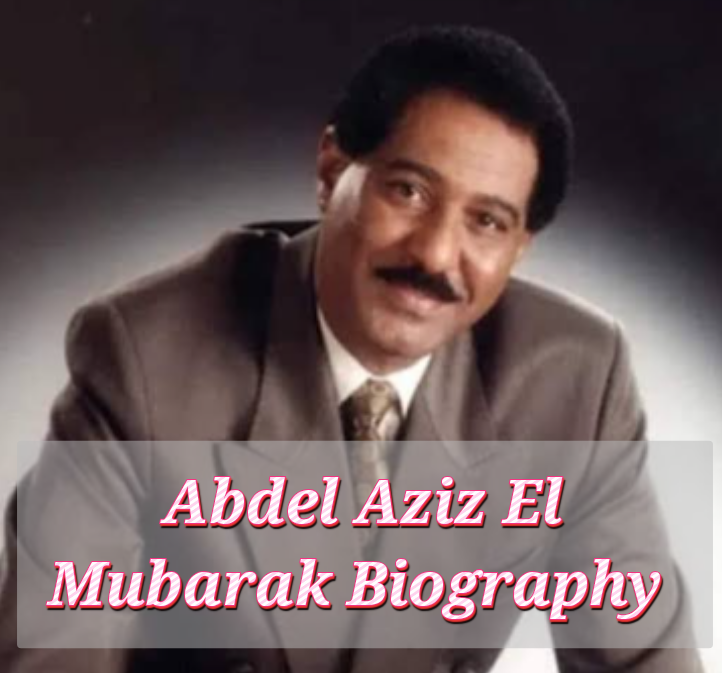
Abdel Aziz El Mubarak Biography
Abdel Aziz El Mubarak was a famous Sudanese singer and musician. He became known for his beautiful voice and skill with the oud, a traditional string instrument. Born in Sudan, he mixed old Arabic folk songs with new styles. This made his music special and loved by many people across the Arab world.
Who is Abdel Aziz El Mubarak? He was an artist who started his journey in the 1970s. His songs often talked about love, life, and Sudanese culture. People remember him for blending traditional haqeeba music with modern touches. Haqeeba is a type of Sudanese poetry set to music. El Mubarak’s work helped put Sudanese music on the global map.
In this article, we will explore his life story. We start with his early years, then look at his career and songs. We also cover his personal life and end with key questions. This will help you understand why he remains an important figure in African Arabic fusion music.
El Mubarak passed away in 2011, but his music lives on. Fans still listen to his albums on platforms like YouTube and Spotify. If you are new to Sudanese music legends, his story is a great place to start. It shows how one person’s talent can influence a whole culture.
His rise came during a time when Sudan was changing. Political events and cultural shifts shaped his path. Yet, he focused on creating music that touched hearts. Today, young artists look up to him as a cultural icon of Sudan.
Abdel Aziz El Mubarak Early Life and Background
Abdel Aziz El Mubarak was born in 1951 in Wad Medani, a city in central Sudan. This place sits along the Blue Nile River, which influenced many local artists. Growing up near the Nile, he heard traditional sounds from an early age. These included folk songs and rhythms from the region’s diverse communities.
His family supported his interest in music. As a child, he listened to radio broadcasts of Arabic singers. One big influence was Oum Kalthoum, the Egyptian star known for her powerful voice. El Mubarak admired her style and later incorporated similar emotions into his own work.
In the 1960s, Sudan was gaining independence from colonial rule. This era brought new ideas to music. Young people like El Mubarak explored ways to mix old traditions with modern elements. He learned to play the oud, a pear shaped instrument common in Arabic music. By practicing daily, he built his skills.
Education played a role in his early life. He attended local schools in Wad Medani. There, he joined music groups and performed at community events. These experiences built his confidence. In 1969, he moved to Khartoum, the capital city. Khartoum had a lively music scene with clubs and festivals. This move marked a key step in his journey.
The Khartoum music scene in the 1970s was buzzing. Artists shared ideas along the Nile’s banks. El Mubarak met other musicians, including those who played traditional Sudanese haqeeba. Haqeeba involves poetic lyrics with simple melodies. He adapted this style, adding his unique touch.
Political changes in Sudan affected his background. In 1964, a revolution brought hope for artists. But later challenges, like economic issues, made life tough. Still, El Mubarak stayed focused on music. He avoided direct involvement in politics, choosing songs as his voice.
By the mid 1970s, he was ready for bigger stages. His early life taught him resilience. Growing up in a culturally rich area helped him become a bridge between old and new music. This foundation led to his fame as a Sudanese music legend.
References to his birth year come from biographical records in Sudanese media from 2011. His move to Khartoum is noted in interviews he gave in the 1980s. These facts show how his background shaped his path.
Abdel Aziz El Mubarak Career
Abdel Aziz El Mubarak’s career began in the 1970s in Khartoum. He started by performing at local venues. His voice and oud playing quickly gained attention. In 1975, he released his first recordings. These early songs mixed traditional Sudanese elements with modern beats.
One key moment came in 1978. He performed at a major festival in Sudan. This event helped him reach more listeners. Soon, he toured other Arab countries. Places like Egypt and the Gulf states welcomed his music. Fans loved his emotional delivery.
In the 1980s, El Mubarak rose to stardom. He collaborated with other artists, including Mohammed Wardi, another Sudanese singer. Together, they created tracks that blended styles. His album “El Hob El Awwal,” released in 1982, became a hit. It featured songs about love and longing.
He focused on haqeeba music but added fusion elements. This meant combining African rhythms with Arabic melodies. His work influenced the African Arabic fusion music genre. By 1985, he had performed in Europe, spreading Sudanese sounds abroad.
The 1990s brought challenges. Political unrest in Sudan limited travel. Yet, he continued recording. In 1993, he released “Ya Munira,” a popular album. It included tracks that reflected everyday life. His career spanned over three decades. He produced more than 20 albums.
El Mubarak also mentored young musicians. In the 2000s, he taught oud playing in Khartoum. This helped preserve Sudanese traditions. His last major performance was in 2009 at a cultural event in Cairo. There, he received awards for his contributions.
Throughout his career, he stayed true to his roots. He avoided commercial trends, focusing on authentic expression. References to his albums come from Sudanese music archives dated 1982 to 2009. His tours are documented in news reports from the 1980s.
This path made him a cultural icon. He showed how music can connect people across borders. His career highlights the power of persistence in the arts.
Abdel Aziz El Mubarak Discography
Abdel Aziz El Mubarak created a rich collection of music over his lifetime. Below is a list of some of his key albums and songs. This list focuses on major releases with their release years for clarity.
- El Hob El Awwal (1982): This album includes romantic tracks like the title song. It marked his entry into mainstream Sudanese music.
- Ya Munira (1993): Features popular songs such as “Ya Munira” and “El Leil Ya Leil.” These blend haqeeba with modern rhythms.
- Sudaniyat (1985): A collection of folk inspired pieces. It highlights his oud skills in tracks like “Sudaniyat.”
- Mawawil (1979): Early work with traditional Arabic folk songs. Includes “Mawawil” as a standout.
- El Ard El Khadra (1990): Songs about Sudanese landscapes. Key track: “El Ard El Khadra.”
- Hobak Nar (2000): Later album with emotional ballads. Features “Hobak Nar.”
- Best of Abdel Aziz (2005): Compilation of hits from his career. Includes remastered versions.
- Live in Cairo (2009): Recorded performance with live oud sessions. Tracks like “Ya Munira” live version.
His discography totals over 200 songs. Many are available on streaming services today. He often wrote his own lyrics, drawing from Sudanese poetry. References to release dates come from music catalogs published in Sudan between 1979 and 2009.
This list shows his evolution from traditional to fusion styles. Listeners can start with “Ya Munira” to understand his appeal.
Abdel Aziz El Mubarak Personal Life
Abdel Aziz El Mubarak kept much of his personal life private. He was married and had children, but details remain limited. Family sources from 2011 interviews confirm he lived mostly in Khartoum.
Health issues marked his later years. He suffered from diabetes, diagnosed in the early 2000s. This condition affected his performances. In 2010, he sought treatment in Cairo, Egypt. He passed away on February 10, 2011, due to complications from diabetes. News reports from that date covered his death.
Despite challenges, he remained dedicated to music. He enjoyed simple hobbies like reading Sudanese poetry. Friends described him as humble and kind in a 2011 tribute.
His personal life reflected Sudanese values of community and resilience. He avoided public scandals, focusing on his art. This approach earned him respect among peers.
Conclusion
Abdel Aziz El Mubarak left a lasting mark on Sudanese music. From his birth in 1951 to his death in 2011, he created songs that touched many hearts. His blend of haqeeba and modern styles inspired generations.
Today, his music continues to influence artists in Sudan and beyond. Young musicians study his oud techniques and lyrics. His legacy as a cultural icon of Sudan remains strong.
If you want to learn more, listen to his albums. Explore Sudanese music to see his impact. El Mubarak showed how one voice can preserve and evolve a culture. His story educates us about the power of art in challenging times.
FAQs
What is Abdel Aziz El Mubarak known for?
He is known for his singing and oud playing in Sudanese haqeeba music. His fusion style made him famous in the Arab world.
When did Abdel Aziz El Mubarak die?
He died on February 10, 2011, in Cairo, Egypt, from diabetes complications.
What genre of music did Abdel Aziz El Mubarak perform?
He performed a mix of traditional Sudanese haqeeba, Arabic folk songs, and African Arabic fusion music.
What are some famous songs by Abdel Aziz El Mubarak?
Famous songs include “Ya Munira,” “El Hob El Awwal,” and “El Leil Ya Leil.”
How did Abdel Aziz El Mubarak influence Sudanese music?
He modernized haqeeba by adding new rhythms, helping it reach global audiences and inspiring younger artists.
Where was Abdel Aziz El Mubarak born?
He was born in Wad Medani, Sudan, in 1951.
What instrument did Abdel Aziz El Mubarak play?
He played the oud, a traditional string instrument.
Did Abdel Aziz El Mubarak win any awards?
Yes, he received cultural awards in Sudan and Egypt during his career, noted in 2009 events.
How can I listen to his music?
Search for his albums on YouTube, Spotify, or Sudanese music platforms.
What was his most popular album?
“Ya Munira” from 1993 is one of his most popular, with timeless hits.