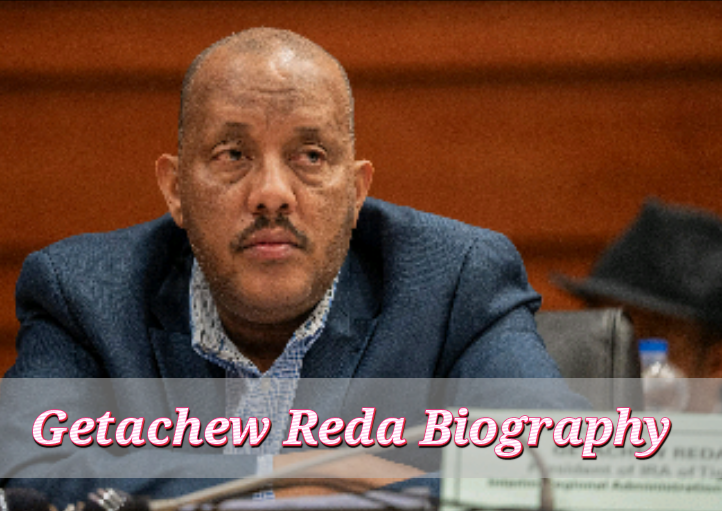
Getachew Reda Biography
Getachew Reda is a key figure in Ethiopian politics. He was born in June 1974 and has played important roles in his country’s government and regional affairs. He started as a law teacher and rose to become a spokesperson for a major political group. Later, he led a temporary government in his home region and now advises the prime minister on matters in East Africa. His story shows how one person can move from local roots to national influence during times of peace and conflict. This biography looks at his life to help readers understand Ethiopia’s recent history through his actions and choices. It covers his beginnings, learning, private side, money matters, work path, disputes, lasting impact, and ends with common questions. The goal is to teach about his role in a simple way, using facts from reliable sources.
Getachew’s journey began in a part of Ethiopia known for its strong cultural ties. He entered politics during a time when his region sought more say in national decisions. Over the years, he has been both praised and criticized for his strong words and decisions. In 2020, he became wellknown for speaking out during a major conflict. By 2023, he took on a leadership role to help rebuild after the fighting ended. Then, in 2025, he made a surprising move to work closely with the central government. This shift surprised many and sparked talks about unity in Ethiopia. His story helps explain the challenges of leading in a diverse nation with a history of regional tensions. Readers can learn how personal background and education shape political careers in places like Ethiopia.
Ethiopia has faced many changes since the 1990s, and Getachew has been part of them. His work touches on themes like regional rights, national peace, and international ties. As of January 2026, he continues to influence policies in East Africa. This makes his biography timely for anyone interested in African politics. The sections ahead break down his life step by step, using clear language to make it easy to follow.
Getachew Reda Early Life
Getachew Reda He was born on June 1974 in Alamata, a town in Wollo Province, which is now part of the Tigray Region in Ethiopia. At that time, Ethiopia was under the rule of Emperor Haile Selassie, but big changes were coming. The country saw a revolution in 1974, the same year he was born, which led to a military government taking over. Growing up in Alamata, a place with a mix of Tigrayan and Amharic cultures, shaped his early views. Alamata is known for its farming lands and close ties to neighboring areas. It was a spot where people from different groups met, which might have taught him about diversity from a young age.
His childhood happened during tough times for Ethiopia. The 1980s brought famines that hit the northern parts hard, including Tigray. Many families struggled with food shortages and political unrest. Getachew’s family likely faced these issues, as the area was a base for groups fighting the central government. One source notes he grew up in a village called Bora, which served as a base for the Tigray People’s Liberation Front, or TPLF. This group was key in resisting the military rule. Being around such activities probably influenced his ideas about justice and regional pride. As a boy, he would have seen how local leaders organized to protect their people. This environment built a sense of resilience in him.
By the early 1990s, the TPLF helped overthrow the military government, leading to a new system in 1991. This change opened doors for education and careers in the north. Getachew’s early years taught him the value of community and standing up for one’s group. These lessons stayed with him as he moved into adulthood. His birthplace in Alamata, with its historical role in trade and culture, added to his identity as someone connected to both Tigrayan and broader Ethiopian roots.
Getachew Reda Education
Getachew Reda’s schooling started in Ethiopia and took him abroad. In 1993, he joined the School of Law at Addis Ababa University, the main university in the capital. There, he earned his first degree in law, known as an LL.B. This was during a time when Ethiopia was building a new federal system after years of conflict. Studying law gave him tools to understand government rules and rights. Addis Ababa University was a hub for young thinkers from all over the country, exposing him to different views.
After finishing his undergraduate studies, he worked as a teacher. But he wanted more knowledge, so between 2001 and 2002, he went to the University of Alabama in the United States for a Master’s degree in law, or LL.M. This experience abroad opened his eyes to international ideas on justice and governance. Living in Alabama, a state with its own history of civil rights struggles, might have inspired him. He learned about legal systems outside Africa, which helped later in his career.
Back in Ethiopia, he became a law professor at Mekelle University in Tigray’s capital. From around 2003 to 2009, he taught students about law. This role let him share his knowledge and influence the next generation. Mekelle University grew during this period, focusing on regional needs. His time as a teacher built his skills in explaining complex ideas simply, which proved useful in politics.
Getachew Reda Personal Life
Details about Getachew Reda’s private side are not widely shared. He keeps his family matters out of the public eye, which is common for many leaders in Ethiopia. Born into a Tigrayan family with Amharic ties, he holds onto his cultural roots. Growing up in Alamata, he learned traditions like community gatherings and respect for elders. These values likely guide his daily life.
No specific facts are available about his marriage or children. He focuses more on public duties than sharing personal stories. In interviews, he sometimes mentions his pride in Tigray’s history, showing a deep connection to his heritage. His move from a rural start to high positions suggests a life dedicated to service rather than personal fame.
As a public figure, he lives in places like Mekelle or Addis Ababa, depending on his roles. His personal interests might include reading about law or history, based on his background. Overall, his private life remains lowkey, letting his work speak for him.
Getachew Reda Net Worth
Information on Getachew Reda’s net worth is not publicly available. As a politician and former teacher, his income comes from government salaries and roles. In Ethiopia, officials like ministers earn modest amounts, often around 10,000 to 20,000 Ethiopian Birr per month, but exact figures for him are not known. He has not been linked to big businesses or wealth sources outside politics.
During his time as a law professor from 2003 to 2009, his pay would have been standard for academics. Later roles in government, such as Minister of Communication Affairs from 2012 to 2016, brought official earnings. His positions in the interim administration and as advisor since 2025 likely provide similar income. No reports suggest he has accumulated great wealth, and he faces no public accusations of corruption tied to money.
In summary, without official disclosures, his net worth remains private. This is typical for many African leaders who prioritize public service over financial displays.
Getachew Reda Career
Getachew Reda’s work path started in teaching and grew into highlevel politics. After his studies, he taught law at Mekelle University from about 2003 to 2009. This job helped him build a name in education circles.
In 2009, he entered government service. He joined the Tigray People’s Liberation Front, or TPLF, a group that had helped shape modern Ethiopia. By 2012, he became Minister of Communication Affairs in the federal government, serving until November 2016. In this role, he handled public information and media under Prime Ministers Meles Zenawi and Hailemariam Desalegn.
From 2020, he acted as spokesperson for the TPLF during tough times. The Tigray War started in November 2020, and he spoke for his side, urging people to join the fight. He announced key events, like the capture of Mekelle in June 2021 and withdrawals in December 2021. His words reached international audiences through media like Twitter, where his account got verified in April 2021.
In November 2022, he helped sign the peace agreement in Pretoria, ending the main fighting. Then, on March 23, 2023, he was named Chief Administrator of the Interim Regional Administration of Tigray. He held this post until April 8, 2025, focusing on rebuilding and aid.
A big change came in 2025. After internal issues in Tigray, including a reported coup in March 2025, he moved to Addis Ababa. On April 11, 2025, Prime Minister Abiy Ahmed appointed him as Advisor for East African Affairs. He also started the Tigray Liberal Democratic Party in 2025. As of 2026, he continues in this advisory role, working on regional ties.
His career shows shifts from education to communication, then to leadership in conflict and peace. Each step built on his legal skills and regional loyalty.
Getachew Reda Controversies
Getachew Reda has faced several disputes in his public life. During the Tigray War from 2020 to 2022, his strong statements as spokesperson drew criticism. He accused federal forces of serious acts and called for mass mobilization, which some saw as increasing tensions. Federal officials disputed his claims, like the 2021 withdrawal announcement, calling it a way to hide losses.
In 2016, while in government, he defended policies during protests in Oromia, dismissing some human rights reports. This made him seem unsympathetic to other groups’ concerns.
Internal TPLF fights added to issues. In March 2025, a faction tried to remove him from the interim role, leading to armed actions in Mekelle. He fled to the capital, and some in Tigray called him a traitor for later joining the federal government. Critics say his move to advise Abiy Ahmed in April 2025 shows opportunism, going from opponent to ally.
Other accusations include leaking sensitive info and focusing too much on Tigray over national unity. In September 2025, he pushed for control of areas like Wolkait, sparking debates on land rights. These events paint him as divisive to some, while others see him as a defender of his people.
Getachew Reda Legacy
Getachew Reda’s impact on Ethiopia is mixed but notable. He helped shape Tigray’s voice in national politics, especially through the TPLF. His role in the 2022 peace deal aided in ending the war and starting recovery. As interim leader from 2023 to 2025, he worked on aid and rebuilding, helping millions in Tigray.
However, his legacy includes divisions. Some view him as a symbol of ethnic politics that fueled conflicts. His 2025 shift to the federal side is seen by critics as a betrayal, but by supporters as a step toward reconciliation. He influenced youth in Tigray with his charisma and formed a new party in 2025, showing adaptability.
Overall, he represents the challenges of unity in Ethiopia. His actions from 2020 onward highlight themes of resistance, negotiation, and change. As of 2026, his work in East African affairs may add to a legacy of diplomacy.
Conclusion
Getachew Reda’s life story reflects Ethiopia’s complex path. From a small town birth in 1974 to advising on regional matters in 2026, he has navigated education, war, and peace. His choices show the pull between local loyalty and national needs. While controversies mark his career, his efforts in rebuilding and dialogue offer lessons on leadership. Ethiopia’s future may depend on figures like him bridging divides. Readers can take away insights on how personal roots influence big decisions in politics.
FAQs
Who is Getachew Reda?
He is an Ethiopian politician born in 1974, known for roles in the TPLF, Tigray interim government, and as advisor to Prime Minister Abiy Ahmed since 2025.
What is Getachew Reda’s education background?
He has a law degree from Addis Ababa University and a Master’s from the University of Alabama in 2001-2002.
What was his role in the Tigray War?
He served as TPLF spokesperson from 2020, announcing key events and helping with the 2022 peace agreement.
Why did he join Abiy Ahmed’s government?
After internal Tigray issues in 2025, he was appointed advisor, seen by some as a move for reconciliation.
What controversies has he faced?
Critics accuse him of divisive rhetoric, opportunism, and involvement in party infighting.
What is his current position as of 2026?
He is Minister Advisor for East African Affairs.
Is there information on his net worth?
No public details are available; his income is from government roles.
What is his legacy?
He is remembered for advocating Tigray interests but criticized for contributing to divisions.